01
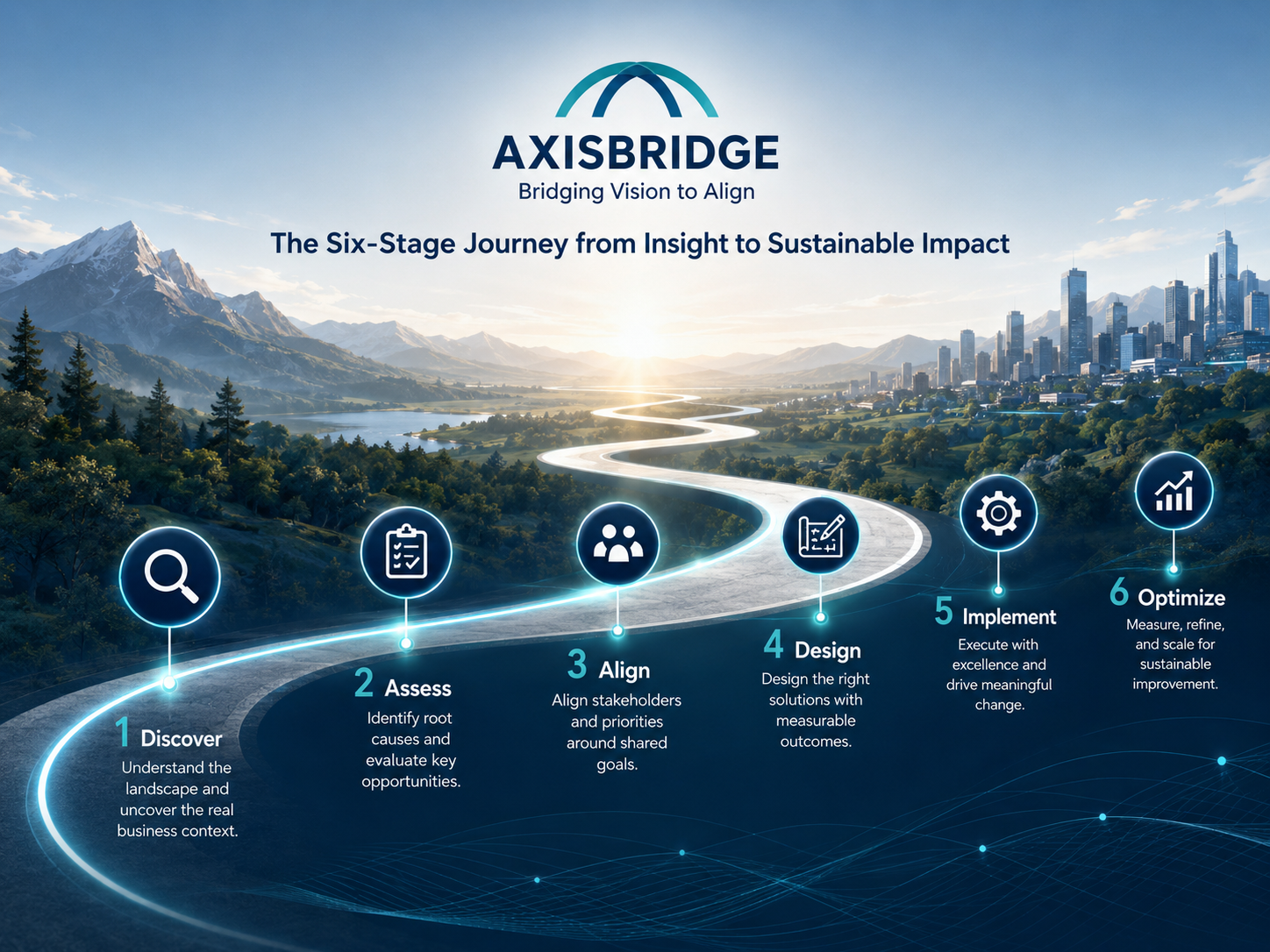
Discover
Understand the business context.
Learn the organization, goals, workforce, systems, stakeholders, history, constraints, and desired outcomes.
- Leadership and stakeholder interviews
- Business goals and priorities
- Current pain points and expectations
- Engagement scope and success criteria
02
Assess
Separate symptoms from root causes.
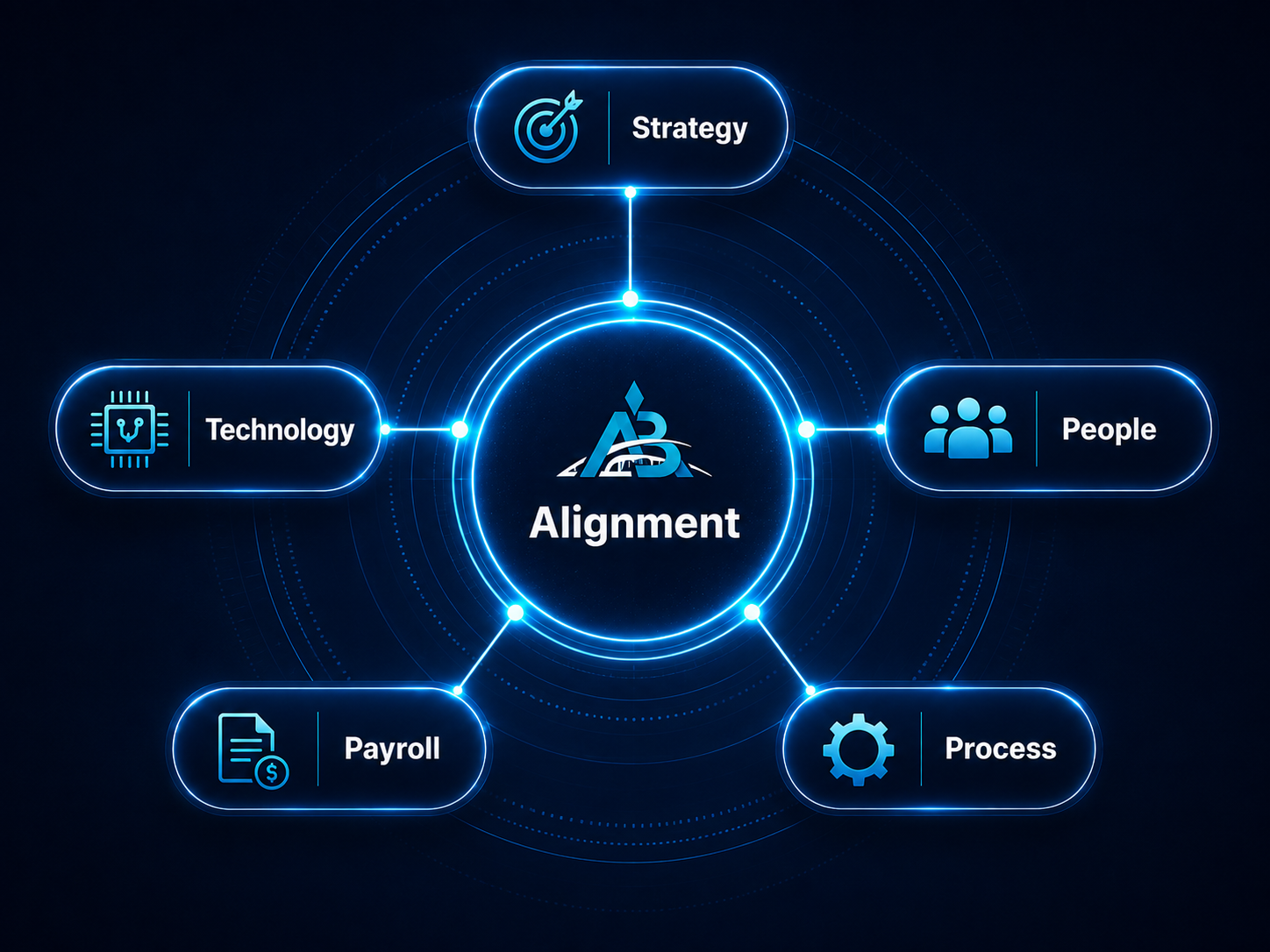
Evaluate the current state across people, process, payroll, technology, controls, data, and governance.
- Current-state process and system review
- Risk, gap, and dependency analysis
- Data and documentation review
- Root-cause identification
03
Align
Create shared direction and ownership.
Clarify priorities, decision rights, roles, tradeoffs, sequencing, and the outcomes that matter most.
- Stakeholder alignment
- Priority and sequencing decisions
- Roles and accountability
- Measures of success
04
Design
Build a practical future state.
Create solutions that fit the organization’s size, maturity, culture, systems, risk profile, and growth plans.
- Future-state workflows
- Governance and controls
- Technology and data requirements
- Roadmaps, tools, and documentation
05
Implement
Turn the design into working operations.
Support execution through project leadership, communication, testing, training, coordination, and issue resolution.
- Implementation planning
- Stakeholder and vendor coordination
- Testing and readiness
- Training, communication, and adoption
06
Optimize
Measure, refine, and sustain.
Review results, reinforce ownership, resolve emerging issues, and improve the solution as the organization evolves.
- Outcome and performance review
- Continuous improvement
- Documentation and governance updates
- Knowledge transfer and sustainability